
Shorebirds and Preservation
Each September we host a site for CA Coastal Cleanup Day. These yearly events were the first volunteer events we hosted under our old name, Banning Ranch Conservancy, starting in 2021.
To celebrate, we want to highlight two of the key shorebird species that call the mouth of the Santa Ana River home. But first, what is a shorebird?
Shorebirds are birds commonly found along beaches, mudflats, marshes, wetlands, lake edges, and other shallow-water habitats. Some typical identifying features are long legs, narrow bills, and body shapes built for walking, running, probing, pecking, or wading.
Two special status species in the Coastal Corridor
Two special status species shorebirds found in the Coastal Corridor are the threatened western snowy plover and the federally endangered California least tern. Both can be seen along the coast of Southern California, but the California least tern is only present during its breeding season of April through September.
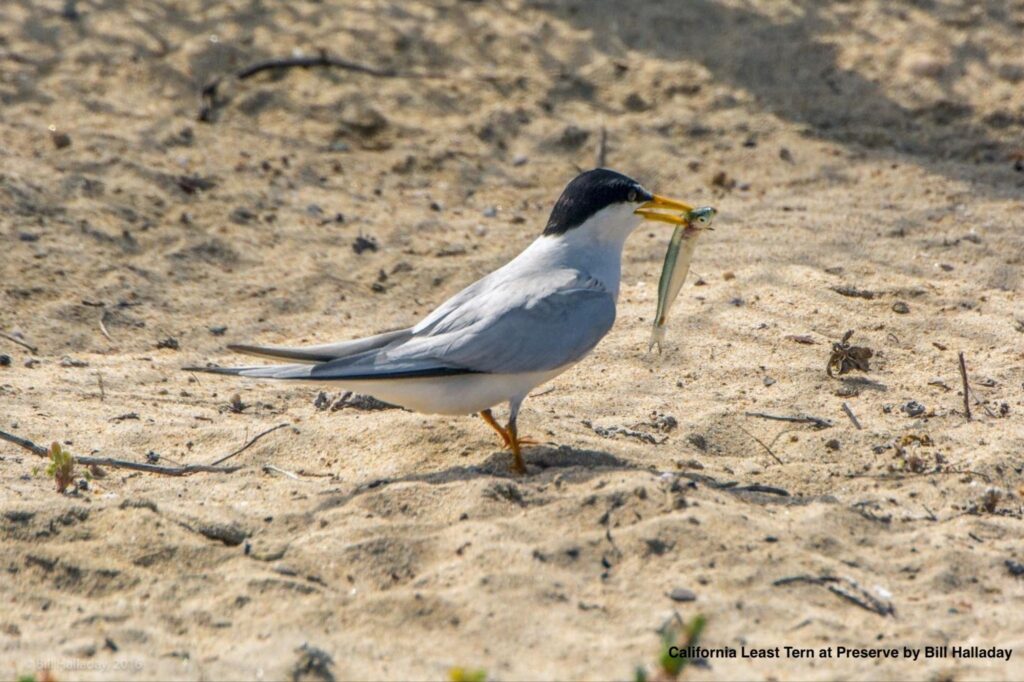
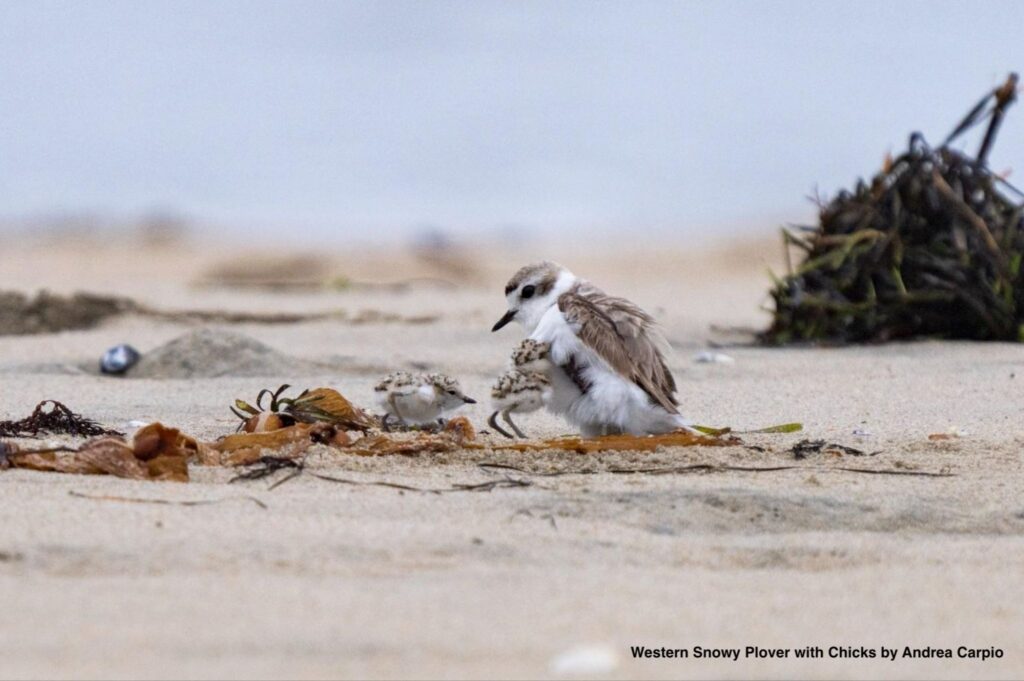
The presence of dogs is a great example of how predator disturbance leads to habitat loss for shorebirds. Huntington State Beach enforces a “No Dogs” policy, while Newport Beach allows dogs in the morning and evening. When these small birds see even the cutest and gentlest dog, they see a predator. The presence of a predator makes the birds stay away for safety, which means they are not freely foraging for the food they need to support their families, leading to hungry or starving chicks. The fear of predators also leads to the birds being unlikely to return to that site to nest, resulting in the loss of safe nesting habitat. This is why western snowy plovers can be seen nesting in the sands of Huntington Beach where the threat of predator disturbance is low, compared to Newport Beach where snowy plovers not longer nest because dogs are present.
Unfortunately, our shorebirds have faced many challenges. Decades of human encroachment including, habitat loss, chemical and plastic pollution, perceived predator threats (dogs) and un-natural predation have had devastating effects on their populations. Where they once foraged and nested freely along our coast, they now have only small areas safe enough for a few to survive.
How are local shorebirds protected?
Conservation groups work hard to protect these shorebirds from going extinct. One example can be seen directly across the river from our cleanup site: the Huntington Beach Least Tern Natural Preserve. Here, least terns have a gated space where they can nest, safer from land predators and other disturbances. Habitat restoration at the Huntington Beach Wetlands, the US Army Corps of Engineers’ Santa Ana River Salt Marsh restoration, Randall Preserve restoration, and regular beach cleanups help bolster the resources these sensitive birds need to survive.
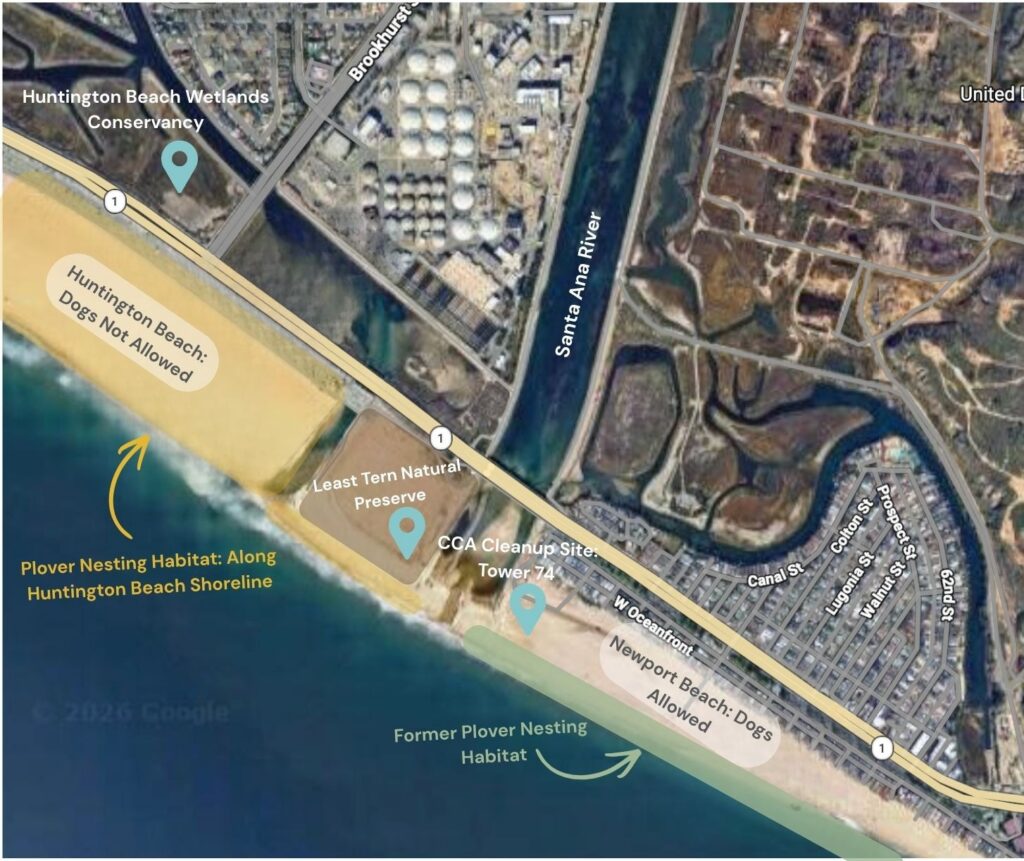
Here are some steps that we as compassionate community members can take to protect ground nesting shorebirds:
- Review your local beach’s dog policy as beaches home to shorebird nesting sites may have a “No Dogs Allowed” policy. Dogs have the potential to disrupt nests and be viewed as predators to shorebirds.
- Dispose of trash properly as it attracts predators and birds can mistake items for food.
- Attend Beach Cleanups as a great way to do your part in protecting their habitat.
- Do not enter posted nesting areas.
- Report any nests, threats or disturbances to plovers to park staff.


